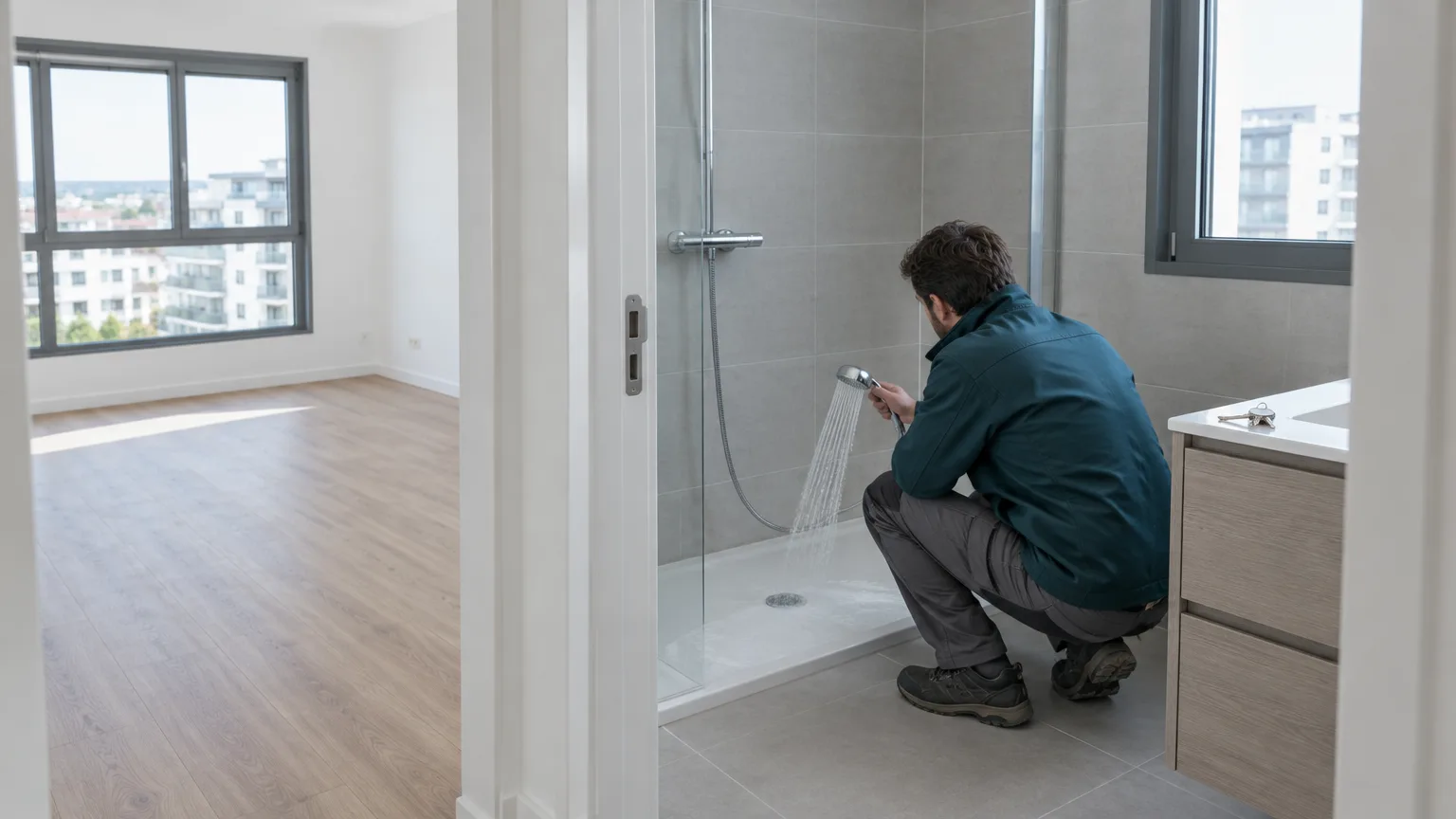
Many new-build calls start the same way: “I get the keys next week, when can you come?” My answer often surprises people: just after. The new-build inspection we do at Revicasa is not done before the handover. It is done in the first days after you get the keys, with the home empty and the utilities connected. It is the only moment when I can test everything that needs testing: open every tap, load every socket, fill every shower and turn on the heating. I explain why, and what I check.
When to do a new-build home inspection
Before the handover, the home still belongs to the developer. Visits before that are usually short, guided and often without electricity or water. You can see the finishes, but you cannot check if the installations work. That is why we do the inspection once you have the keys: you have full access, no rush, and you can give it the time it needs.
Getting the keys does not take away your right to claim. Article 17 of the Spanish Building Act (LOE) sets three liability periods for material damage to the building:
- Ten years, for defects that affect the foundations, columns, beams, floor slabs, load-bearing walls or other structural elements and directly put the mechanical strength and stability of the building at risk.
- Three years, for defects in building elements or installations that mean the habitability requirements are not met: hygiene, health and environmental protection, protection against noise, energy saving and thermal insulation, and other functional aspects.
- One year, the builder’s responsibility, for workmanship defects that affect finishing elements.
These periods start from the acceptance of the works without reservations, which is an act between the developer and the builder and usually happens before you get the keys. So it is better not to wait: the sooner the defects are recorded, the better. I explain what falls under each period and how to claim in new-build defects: what you can claim and the time limits.
You cannot request the electricity and water connection before you have the keys, because the developer gives you the documents you need on that same day. That is why the ideal moment is as soon as the utilities are working and before you move in. With the home empty I can see whole floors, walls and skirting boards. With furniture inside, part of it is hidden and any new knock gets mixed up with building defects.
If you are asked to sign a handover document on the day you get the keys, read it calmly. Signing that you have received the keys does not mean you accept that everything is fine. If you already see a defect, write it on that document or send it in writing that day, and leave the rest for the report.
Why I need the utilities connected
A new home without electricity and water can only be half inspected. With the utilities working, the inspection goes from looking to testing. These are some of the tests I do:
- Electricity. I test the sockets with a tester, check the consumer unit, trip the residual current devices to see that they work and check the earthing. I also check switches, light points, doorbell and video entry system.
- Water. I open every tap to check pressure and flow, measure how long hot water takes to arrive, and fill basins, sink, shower trays and baths to check that they drain well and that there are no leaks in traps or joints.
- Heating and air conditioning. I turn on the boiler, the heat pump or the underfloor heating, and the air conditioning. With the heating on, the thermal camera shows me the path of the circuits, areas that do not heat up and thermal bridges.
- Ventilation. I check that extractor fans and mechanical ventilation work and pull air as they should.
- Motorised elements. Blinds, awnings or garage doors that depend on power.
My advice: on the day you get the keys, ask the developer for all the documents for the installations and request the electricity and water connection, and gas if there is any. Book the inspection for when they are working, and do not move furniture in until you have the report.
What I check in a new-build inspection
A new home does not have the wear of a second-hand one, but it does have the typical faults of building work that is finished in a hurry. These are the points I look at most closely:
| Area | What I check |
|---|---|
| Finishes | Paint, trims, joints, skirting boards, knocks and building marks. |
| Floors and tiling | Flatness, tiles that sound hollow, uneven edges between tiles, joints and badly cut pieces. |
| Doors and windows | That doors, windows and wardrobes close and fit well, hardware, seals and blinds. |
| Bathrooms and kitchen | Sealing of shower trays, baths and worktops, falls towards the drain, fixing of sanitary ware and taps. |
| Installations | Electricity, plumbing, heating, air conditioning and ventilation, with the utilities working. |
| Terraces and outside | Falls, drains, joints with the window frames, height and fixing of railings. |
| Damp | Stains, condensation and leaks, with thermal imaging and a moisture meter. |
| Garage and storage room | If they come with the home, I check them too, even with no signal: the app works offline. |
The defects I find most often
- Incomplete or badly finished silicone seals on shower trays, baths and worktops.
- Slow drains or shower trays with a bad fall, which leave standing water.
- Doors that rub or do not close, and windows with badly fitted seals.
- Tiles that sound hollow, which can come loose or break over time.
- Badly connected sockets or sockets without earthing, and loose switches.
- Terraces that slope towards the facade instead of towards the drain.
- Loose skirting boards, knocks on doors and frames, and building debris in joints and on glass.
Finding defects is normal. In the report, each point checked is marked “with defect” or “no defect”. When there is a defect, I add photos, its location and a comment explaining what it is, why it happens, whether it is serious and what needs to be done. This way the developer knows exactly what to repair, and you know what is urgent.
If you want to see these tests in a real home, the Revicasa YouTube channel has many videos of new-build inspections. It shows better than any text how to test a shower or why a hollow-sounding tile matters.
What to do with the report
You receive the report in 48 hours. From there, my advice is always the same:
- Send it to the developer in writing, in a way that records the date, with the list of defects you want repaired.
- Ask for a date for the repairs. Most developers have an after-sales service for this.
- Check the repairs before you close each point, and keep all the messages.
- If they do not answer or do not repair, the next step is no longer an inspection but an expert report that you can use to make a claim.
The new-build inspection has a fixed price based on the floor area of the home; you can see it on our prices page. For more context on why it is worth checking a newly built home, see also our guide for new-build buyers.
What a visual inspection cannot see
A new home does not mean I can see everything. I do not lift tiles, so I cannot check the waterproofing under a shower tray or a terrace; what I do is test it with water and look for damp with the camera and the moisture meter. I also cannot see installations inside walls or hidden structure, and I cannot go onto roofs without safe access. Sound insulation between homes can only be measured with a specific test.
And some defects do not exist yet on the day of the inspection. A new building settles during its first months, and some cracks or damp appear later. That is why it is a good idea to check the home again before the end of the first year, which is the period to claim finishing defects.

Written by
Iván Samaniego
Registered architect (COAM) and co-founder of Revicasa
On the blog he shares what we learn on every inspection so you can decide with objective information.