In the same week I often get two calls that start with the same sentence: “I need an architect to come and look at my home.” In the first, someone is about to sign the deposit contract for a flat built in the seventies. In the second, someone has had a stain on the bedroom ceiling for months, and the upstairs neighbour says it is not their problem. Both people need a technical expert, but not the same document. The first one needs a home inspection. The second one needs an expert report on the property. Mixing them up is expensive: either you pay for a document that does not help you, or you start a claim without the evidence you will be asked for.
What an expert report on a property is
An expert report on a property, also called a technical expert report, is a technical opinion, signed by an architect, that answers specific questions about a defect or damage: what happened, why it happened, who may be responsible under the regulations and how much it costs to repair. What defines it is not the building but the reader. A property expert report is written for someone who has not been there: an insurer, a lawyer, the other party or a judge.
An inspection is something else. It is a general review of the condition of the home before you make a decision, usually before buying or when you receive a new-build home. The reader is you. It tells you what you will find, what is serious and what is not, and it gives you arguments to negotiate. I explain this in more detail in what the inspection report contains and how to use it.
Inspection or expert report: the differences that matter
| Aspect | Home inspection | Expert report on a property |
|---|---|---|
| When | Before buying or renting, or when you receive a new-build home | When there is already damage, a defect or a disagreement |
| Question it answers | What condition is it in and what will I find? | What happened, why, and who is responsible? |
| Who it is for | For you, to decide and negotiate | For a third party: insurer, lawyer, owners' association or court |
| Scope | The whole home, in general | One or more specific defects, in depth |
| Result | Defects classified by severity and priority | Causes, responsibilities under the regulations and cost of the repair |
| Delivery time | 48 hours | Usually 1 to 3 weeks after the visit |
| Price | Fixed price by floor area: flats from €299 | From €1,200, depending on the case and its complexity |
| In court | It is not designed for that | It is submitted as evidence and the expert can confirm it at the hearing |
When you need an inspection
- You are going to buy a second-hand home and want to know its real condition before you sign the deposit contract.
- You are receiving a new-build home and want to check the finishes and installations right after you get the keys, with the electricity and water connected.
- You are going to negotiate the price and need a technical basis, not an impression.
- You want to know the condition of a property you are inheriting, selling or renting out.
In all these cases there is no dispute yet. The question is “is this right for me?”, not “who pays?”. An inspection is faster, cheaper and more useful for making a decision. You can see the exact prices on our prices page.
When you need an expert report
An expert report comes in when there is already damage and someone has to take responsibility for it. These are the situations I see most often:
- Leaks or water coming from another home, and nobody accepts that the source is in their property.
- An insurer rejects the claim or values it far below the real cost of repair.
- A serious defect appears after you buy and you want to claim against the seller for hidden defects.
- Defects in a new-build home that the developer does not repair.
- Damage caused by works in the building next door or in a neighbour's flat.
- Poor-quality renovation work and a disagreement with the builder about what is wrong and how much it costs to fix.
- Damage to common areas of the building, when the owners' association and an owner do not agree on its origin.
If your case is similar to any of these, what you need is a property expert report, not an inspection.
What changes in my work when I write an expert report
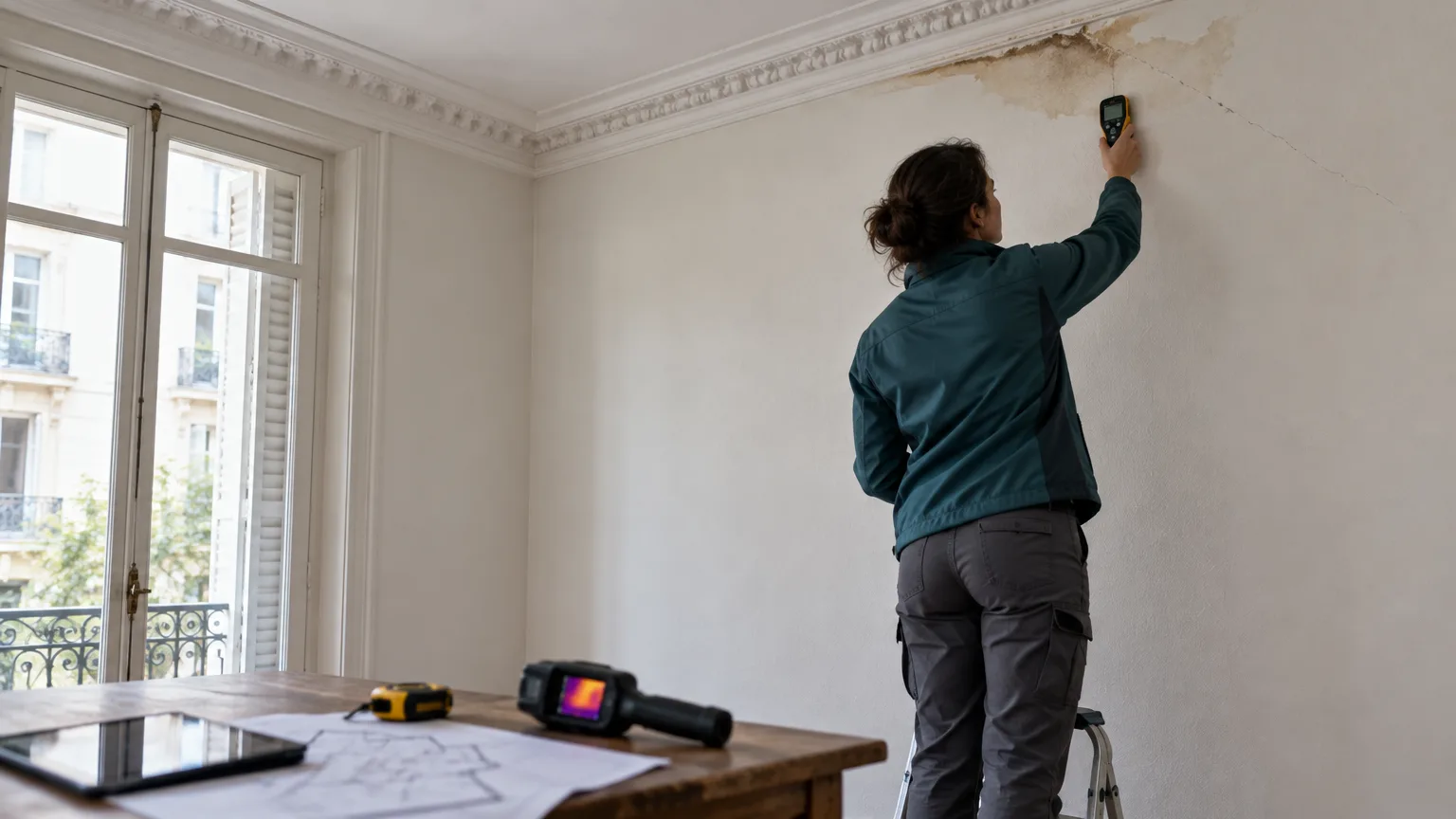
In an inspection I go through the whole home with a checklist and record everything I find. In an expert report I do the opposite: I focus on one problem and do not let go until I know where it comes from. I make hypotheses and rule them out one by one. A stain on a ceiling can be a leak from a pipe inside the wall, water coming through the terrace above or condensation. Each cause has a different person responsible, so it is not enough to say there is damp: I have to prove which of the three it is.
The way I write also changes. An expert report must be clear to someone who has not seen the damage and who, sometimes, has an interest in not believing it. That is why each conclusion is supported by photos, measurements and documents, not by my opinion. And I sign it knowing that I may have to defend it at a hearing, in front of the other party's expert. The Spanish Civil Procedure Act requires the expert to declare that they act objectively. For me this means something very concrete: if the result does not favour the person who asked for the report, I tell them before I sign.
What an expert report includes
- Purpose: which questions the report answers and who commissions it.
- Background and documents: title deeds, project, contracts, insurance reports, communications with the other party.
- Survey: the visit, the measurements and the tests carried out, with dated photos.
- Analysis of causes: why the damage happened and which hypotheses are ruled out.
- Technical responsibilities: which party or element is at the origin, under the applicable regulations.
- Cost assessment: the cost of the repair, item by item.
- Conclusions: clear answers to the questions in the purpose.
- Declarations required by the Civil Procedure Act: the oath or promise to tell the truth and act objectively, and the declaration on grounds for challenge (tachas), where the expert states whether they have any family tie, relationship or interest with either party that could cast doubt on their impartiality.
These declarations are not a formality. A report without them can lose value as evidence, because the other party will have an easy argument to question the expert's impartiality.
When an inspection leads to an expert report
The two are not exclusive. They often come one after the other. If you have an inspection before buying and the report points to a warning sign, for example a diagonal crack or an old stain on a false ceiling, you have two options: negotiate, or ask for a deeper study before you sign. If you buy without an inspection and the problem appears later, there is nothing left to negotiate: you have to make a claim, and to make a claim you need an expert report.
An earlier inspection also helps if the dispute comes later. It records, with dates and photos, the condition of the home at the time of purchase or handover. That document can be a good starting point for the expert.
My advice: ask yourself one question. Do you want to decide, or do you want to prove something? If you want to decide, ask for an inspection. If you want to prove something, ask for an expert report. And if there is already damage, do not repair it or cover it before an expert has documented it. Once it is repaired, what happened can only be rebuilt from photos and statements.
Watch the deadlines. In Spain, you only have six months from handover to claim hidden defects against the seller. For new-build homes, the Building Act (LOE) gives 1 year for finishing defects, 3 years for habitability defects and 10 years for structural defects. An expert report takes weeks: order it early.
What a visual inspection cannot see
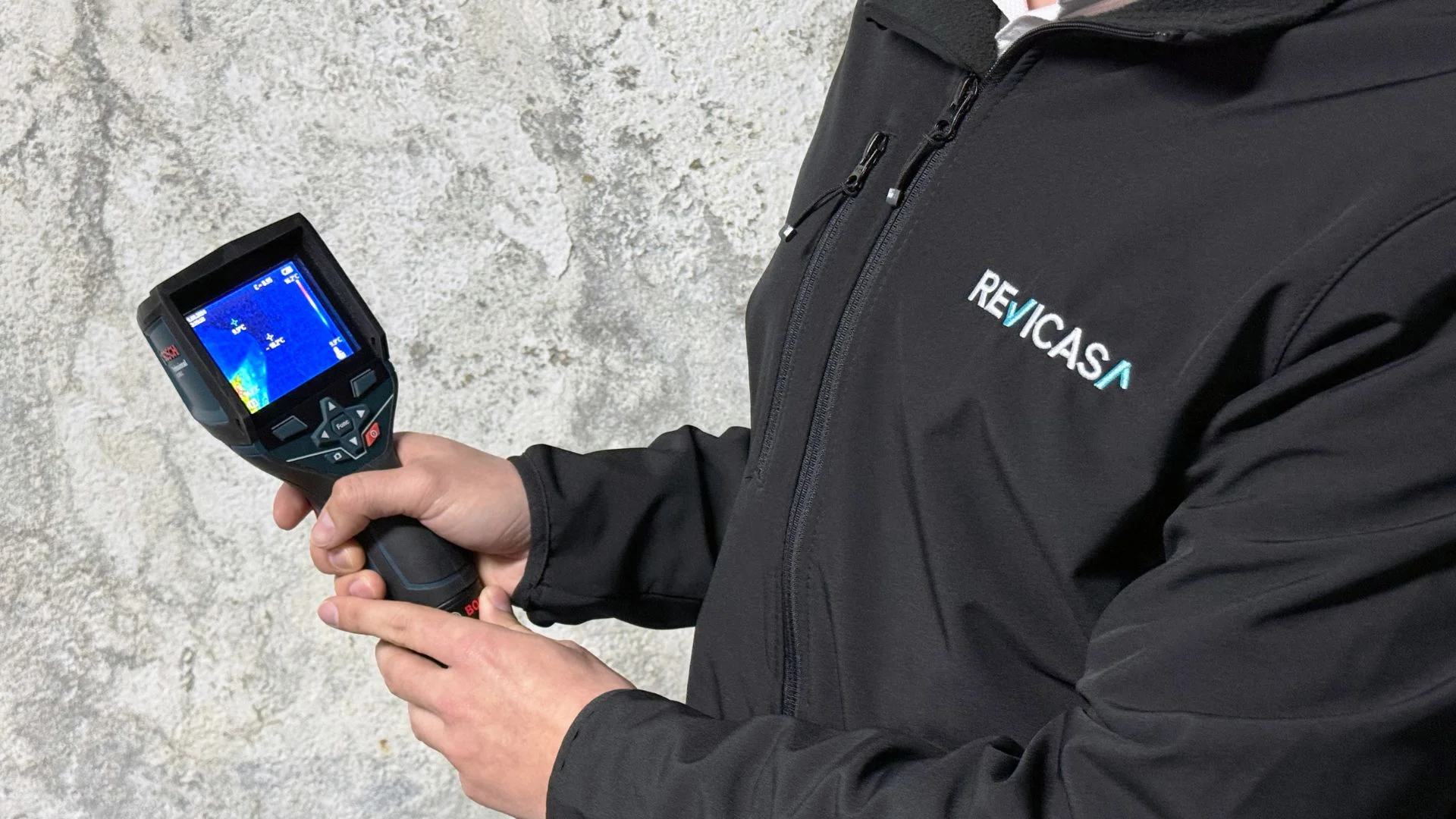
Neither in an inspection nor in an expert report can I see through walls. Without opening them, I cannot know the condition of a pipe inside a wall, the steel inside a beam or the foundations. The thermal camera and the moisture meter give me very useful signs, but they are only signs. To confirm some causes, an extra test is needed: an opening in a wall or floor, an endoscope, a water-tightness test or a laboratory test. These tests need permission from the owner, sometimes from a neighbour or the owners' association, and they cost extra. I will tell you before doing them and explain what each one can add.
There is another limit you should know. As an architect, I establish the technical cause of the damage and who was involved in it. Whether that becomes legal liability, and how much, is decided by the parties with their lawyers or, in the end, by a judge. My report is the technical basis for that conversation, not a replacement for it.

Written by
Iván Samaniego
Registered architect (COAM) and co-founder of Revicasa
On the blog he shares what we learn on every inspection so you can decide with objective information.